Source: Macao Daily News
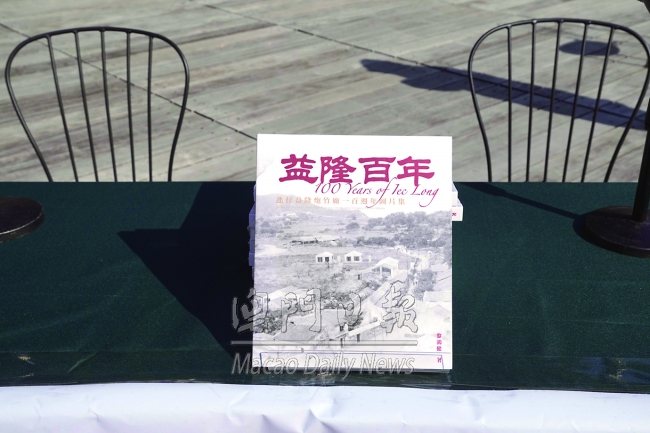
“100 Years of Iec Long,” written and published by Mr. Lai Hong Kin, a researcher deeply engaged in the local history of Taipa, and produced by Pentalker Studio Publication, Co. Ltd., was launched yesterday. The book includes more than 600 precious historical photographs and documents, offering a detailed account of the development of the Iec Long Firecracker Factory since its establishment in 1925. Rich in content and highly readable.
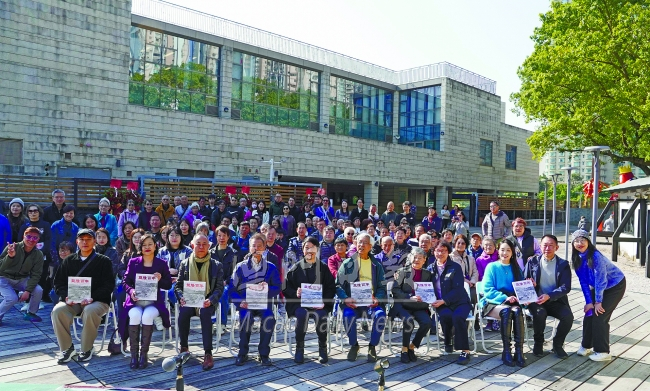
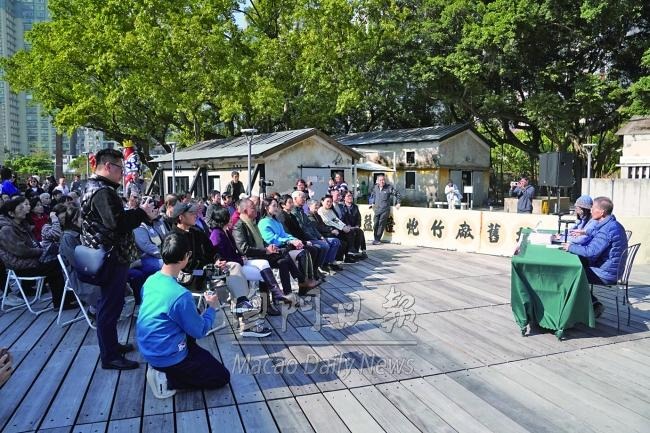
The launch ceremony was organized by Pentalker Studio Publication, Co. Ltd., with support from the Cultural Affairs Bureau and Sands China Ltd., and was held yesterday at 2:30 p.m. at the Former Yek Long Firecracker Factory Site in Taipa. Attendees included Leong Wai Man, president of the Cultural Affairs Bureau; Sit Kai Sin, director of the Maritime Museum; Ung Vai Meng, specially appointed professor at the Faculty of Humanities and Arts of Macau University of Science and Technology; Leong Heng Teng, honorary president of the General Union of Neighbourhood Associations of Macau; veteran media professional Lam Iok Fong; Josie Ho and Jorge, assistant directors of special projects in corporate communications and community affairs at Sands China Ltd.
Tracing the rise and decline of Iec Long
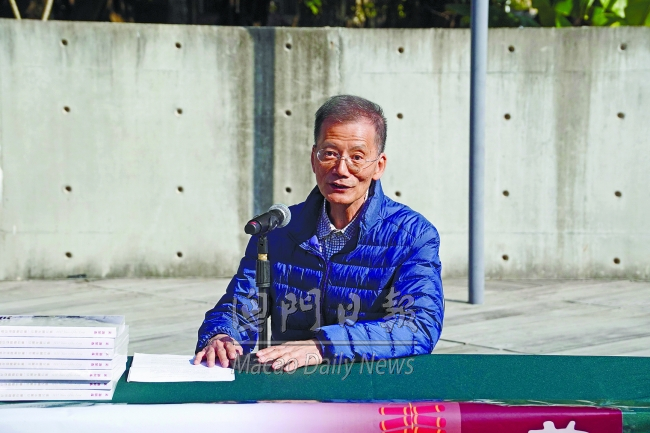
Lai Hong Kin shared, on this rare occasion, his reflections from spending many years collecting historical materials and conducting field research. He said that the book offers a valuable account of the development of the Iec Long Firecracker Factory since its establishment: from Tang Pik Tong, a businessman from Nanhai, Guangdong, traveling to Taipa to found the Iec Long Firecracker Factory, to the later establishment of a company to expand the business. In its early years, the business was already confronted with the turmoil brought about by the Japanese invasion of China and the fall of Hong Kong, yet it managed to endure those difficult times through perseverance. After the Second World War, with the liberation of Hong Kong, Iec Long seized the opportunity to establish a branch office there and expand into overseas markets. At the same time, it enlarged its factory in Taipa and built supporting facilities such as firecracker workshops, fuse-making rooms, and firecracker drilling rooms to increase production capacity. This enabled the company to successfully sell its products directly to overseas markets, showcasing the peak prosperity of Macau’s firecracker industry at the time and leaving an important mark on Taipa’s modern industrial flourishing.
With the wave of emerging industries in Macau and Taipa in the 1960s, the traditional firecracker industry gradually declined under growing pressure. Although the Iec Long Firecracker Factory made every effort to hold on, it was ultimately unable to withstand the changes of the times, and in 1984 it ended nearly sixty years of operation. Thereafter, the factory site remained deserted for a long period, and the deteriorating condition of its buildings gradually gave rise to hidden concerns.
Becoming a cultural landmark of Taipa
The author of this book, Lai Hong Kin, has for many years continued to collect and organize historical materials, while also actively advocating for site conservation and heritage rescue. Later, with the promotion of restoration and revitalization by the relevant departments, the Former Iec Long Firecracker Factory Site preserved its historical fabric and original character, and was officially opened to the public in 2022, becoming a landmark of Taipa’s historical and cultural heritage with significant social value and educational importance. Earlier, Lai Hong Kin had already donated the materials he collected to the Macao Museum, hoping that these precious historical records could be preserved and passed on permanently.
“100 Years of Iec Long ” not only offers a comprehensive retrospective of the rise, decline, achievements, and hardships of the Yek Long Firecracker Factory, but also connects the development of Taipa with the historical rhythm of Macau’s traditional industries. Through an objective and nuanced narrative enriched with abundant images, the book combines historical reference value with a strong human touch. It is intended to become an important work for the public to better understand the development of local industries and cultural heritage, while also providing valuable material for local history research in the Greater Bay Area.
Connecting regional tourism zones
Lai Hong Kin hopes that, with the Former Iec Long Firecracker Factory Site as the core, places such as Rua do Cunha, the stone steps of Travessa dos Ladrões, and the Taipa Houses can be linked together to form a tourism zone, thereby extending Taipa’s tourism appeal.
Participants engaged in lively discussions on Macau’s traditional industries, community transformation, and the revitalization of cultural heritage. A book signing session was also arranged at the venue and received an enthusiastic response, with many local residents holding copies of the new book and taking photos in front of the former factory buildings as a gesture of support for documenting local culture.
 2026/03/07